
The rule comes from Dutch professor of urban greenery Cecil Konijnendijk and is based on three simple principles:
• 3 trees visible from every house;
• 30 per cent tree canopy cover in every neighbourhood;
• and a maximum of 300 metres walking distance to a public green space.
But as simple as it sounds, it is complex in practice. Especially if you want to use the rule in, for example, a Digital Twin, or when comparing the existing situation with a redesign proposal. All kinds of assumptions and settings are involved, and these are also interpreted differently by local authorities, consultancies and other parties. Sometimes, derivatives of the rule are even drawn up to better suit local ambitions or environmental visions.
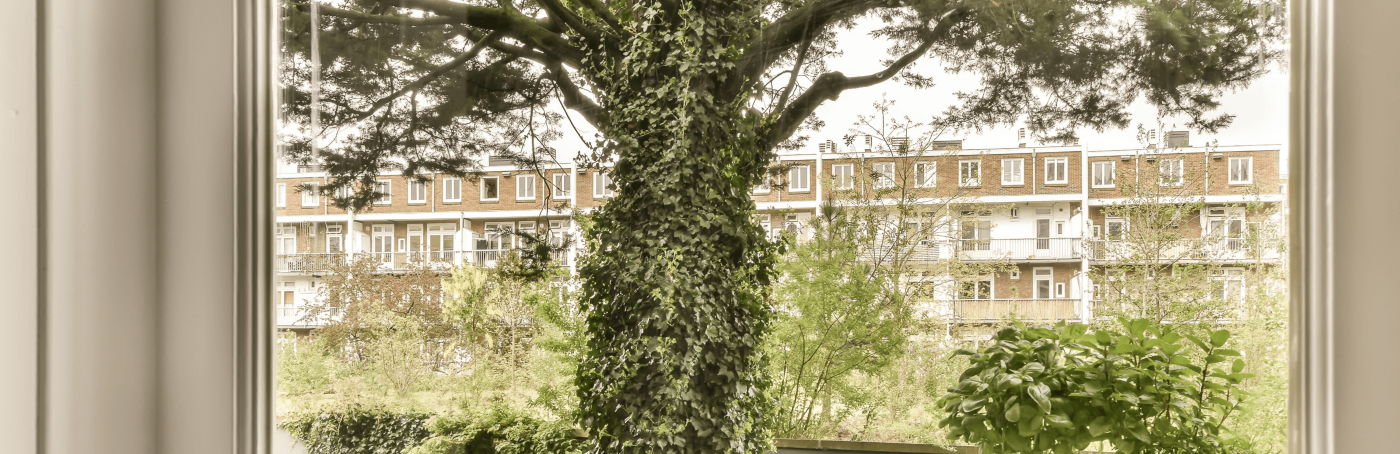
We have included GAES in the first “3” of the rule because a client had questions about it. After all, what does it actually mean to be able to see three trees? How far away can that tree be? From what angle do you need to look? And does one large, monumental tree perhaps count for more than three young trees? In our model, we have now made it clear whether you can see one, two or three trees from a window (see photo below). This adds a little more nuance and makes the model more useful for discussions about quality and perception.
In this way, we continue to enrich our models. Because behind those three simple numbers lies something much bigger: the value of greenery for health, quality of life and climate. By making that visible, we at GAES can help our customers make the right choices for a greener, healthier living environment.
